


The Middle East has long been one of the world’s most important regions for oil production. Many countries across the globe, including India, depend heavily on oil imports from this region to meet their energy needs. When conflicts or wars break out in the Middle East, they often disrupt oil supply chains, leading to fuel shortages, rising prices, and economic concerns in importing nations. A war in the region can therefore create serious fuel-related challenges for India.
India is one of the largest consumers of crude oil in the world. However, the country produces only a small portion of the oil it needs domestically and imports more than 80% of its crude oil requirements. Much of this oil comes from Middle Eastern countries such as Saudi Arabia, Iraq, United Arab Emirates, and Kuwait. Because of this heavy dependence, any instability or military conflict in the region can quickly affect India’s fuel supply and pricing.
One major impact of a Middle East war is the disruption of oil production and transportation. Oil fields, refineries, and pipelines in conflict zones may be damaged or shut down due to safety concerns. Additionally, key shipping routes such as the Strait of Hormuz are extremely important for transporting crude oil from the Middle East to other parts of the world. If war or military tensions threaten these routes, oil tankers may face delays or restrictions, reducing the amount of oil reaching global markets.
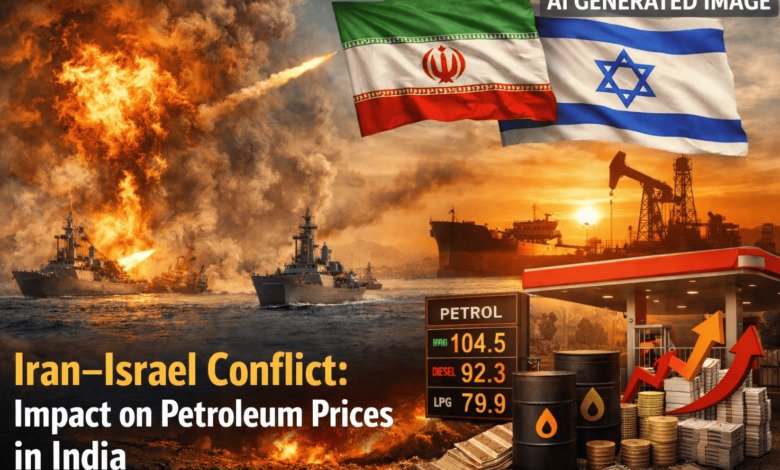
When oil supply decreases or becomes uncertain, global crude oil prices usually rise. As India imports most of its oil, higher international prices directly affect the cost of fuels such as petrol, diesel, and LPG in the country. This increase in fuel prices can create a chain reaction across the economy. Transportation costs rise, which leads to higher prices for goods, food, and essential services. Inflation can increase, putting pressure on households and businesses alike.
Another major concern during such crises is the strain on government finances. To protect consumers from sudden fuel price spikes, the Indian government may reduce fuel taxes or provide subsidies. While this helps keep prices somewhat stable for the public, it can also increase the financial burden on the government budget.
Industries that rely heavily on fuel are particularly affected during such situations. The transportation sector, aviation industry, logistics companies, and manufacturing units may experience higher operating costs. Airlines, for example, spend a large portion of their budget on aviation fuel, so rising fuel prices can lead to higher ticket prices for passengers.
However, India has been taking steps to reduce the risks associated with fuel supply disruptions. One important strategy is diversifying oil imports by purchasing crude from multiple countries outside the Middle East. India has increased imports from countries like Russia and United States to ensure a more stable supply.
The country has also developed strategic petroleum reserves to store crude oil for emergency situations. These reserves act as a backup supply that can be used if imports are disrupted for a short period of time. In addition, India is investing heavily in renewable energy sources such as solar, wind, and electric mobility to gradually reduce dependence on imported fossil fuels.
In conclusion, wars or conflicts in the Middle East can significantly affect fuel availability and prices in India due to the country’s dependence on imported oil. Disruptions in production, transportation, and global supply can lead to higher fuel costs and economic challenges. However, through diversification of imports, strategic oil reserves, and increased focus on renewable energy, India is working toward improving its energy security and reducing the impact of such global crises in the future.