


Artificial Intelligence (AI) has rapidly become one of the most influential technologies of the modern world. From improving healthcare systems to transforming education and business operations, AI is helping organizations and individuals work smarter and more efficiently. By analyzing large amounts of data, automating repetitive tasks, and making intelligent predictions, AI is reshaping the way many industries operate.
As technology continues to evolve, the use of AI is expanding into multiple domains, making everyday processes faster, smarter, and more reliable.
AI in Healthcare
One of the most impactful uses of AI is in healthcare. Hospitals and medical professionals are increasingly using AI to improve diagnosis, treatment planning, and patient care. AI-powered systems can analyze medical data such as scans, lab results, and patient histories to detect diseases earlier and more accurately.

For example, AI can help identify conditions such as cancer, heart disease, and neurological disorders through image recognition technologies. Virtual health assistants and chatbots are also being used to answer patient questions, schedule appointments, and provide basic medical advice.
AI also helps researchers analyze large medical datasets, which accelerates the development of new medicines and treatments.
AI in Education
Education is another domain where AI is creating significant changes. AI-powered learning platforms can personalize education by adapting lessons according to a student’s learning pace and style. This helps students understand difficult topics more effectively.
Virtual tutors and AI-based learning assistants are also helping students receive instant feedback and guidance. Teachers can use AI tools to analyze student performance data and identify areas where students need additional support.
AI is also improving administrative tasks in schools and universities by automating grading, attendance tracking, and course management.
AI in Business and Marketing
Businesses are increasingly using AI to improve decision-making and customer engagement. AI tools can analyze consumer behavior, market trends, and purchasing patterns to help companies design better products and marketing strategies.
Chatbots and virtual assistants are widely used in customer service to answer queries and provide support 24/7. AI also helps businesses personalize advertisements, recommend products, and improve user experience on websites and mobile applications.
Additionally, AI-driven analytics enable companies to predict market demand, optimize supply chains, and reduce operational costs.
AI in Finance
The financial sector has widely adopted AI to improve security, efficiency, and customer services. Banks and financial institutions use AI algorithms to detect fraudulent transactions by identifying unusual patterns in financial data.
AI also helps automate tasks such as credit scoring, loan approvals, and financial risk assessment. Robo-advisors are becoming popular for investment management, providing users with automated financial advice based on their goals and risk tolerance.
By analyzing massive datasets in real time, AI helps financial institutions make faster and more accurate decisions.
AI in Transportation
Transportation is another field where AI is making a strong impact. AI-powered navigation systems help drivers find the fastest and most efficient routes by analyzing traffic data in real time.
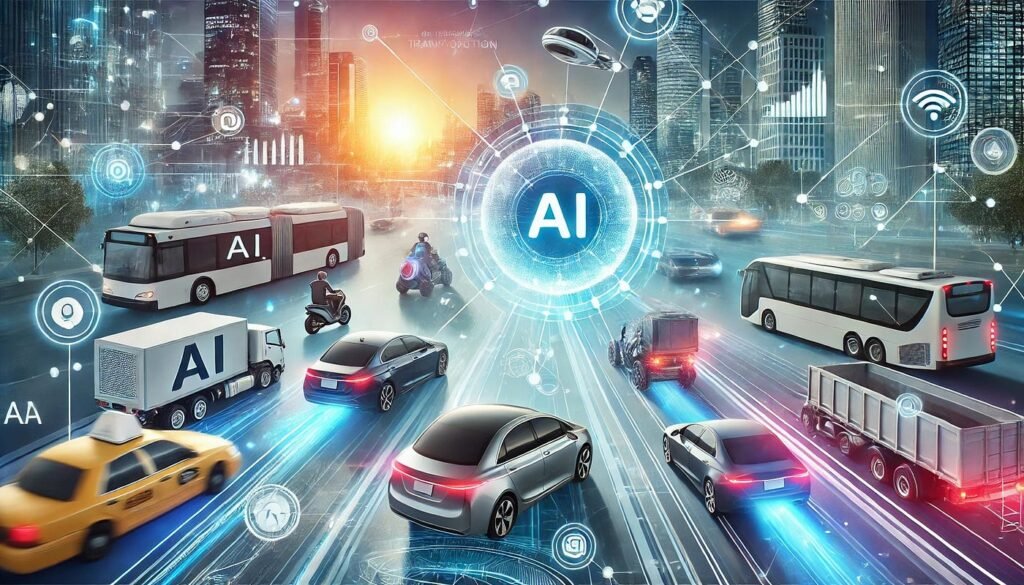
Self-driving vehicle technology is also being developed using AI. These vehicles use sensors, cameras, and machine learning algorithms to understand their surroundings and make driving decisions.
AI is also improving logistics and delivery services by optimizing routes, reducing fuel consumption, and improving delivery efficiency.
AI in Agriculture
AI is helping farmers improve productivity and sustainability in agriculture. AI-powered systems can analyze soil conditions, weather patterns, and crop health to provide recommendations for irrigation, fertilization, and pest control.
Drones equipped with AI technology can monitor large farms, identify plant diseases, and assess crop growth. This allows farmers to make better decisions and increase crop yields while reducing resource waste.
Conclusion
Artificial Intelligence is transforming industries across the world by improving efficiency, accuracy, and decision-making. From healthcare and education to finance, transportation, and agriculture, AI is helping solve complex problems and create new opportunities.
As AI technology continues to evolve, its applications will expand even further, shaping the future of industries and everyday life. By adopting AI responsibly and effectively, businesses and societies can unlock its full potential and create a smarter and more innovative world.