


In February 2026, India and Brazil took a significant step in reshaping global economic and geopolitical dynamics by signing a strategic pact on critical minerals and rare earth elements — a move that could alter supply chains, strengthen South–South cooperation, and challenge existing power balances in global resource markets.
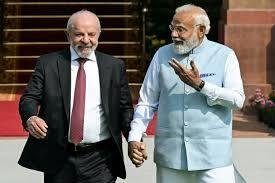
At the heart of this breakthrough was a high-profile meeting in New Delhi between India’s Prime Minister Narendra Modi and Brazil’s President Luiz Inácio Lula da Silva, where the two leaders formalized a memorandum of understanding (MoU) aimed at deepening cooperation on critical mineral production, processing, and trade.
Why Critical Minerals Matter
Critical minerals — including rare earth elements, lithium, cobalt, and other indispensable resources — are essential for the technologies driving the 21st-century economy. These materials are used in electric vehicle batteries, renewable energy systems like solar panels and wind turbines, advanced electronics, defence equipment, and aerospace components.
Until now, China has dominated the global supply chain for rare earths and many critical minerals, controlling a large share of both mining and processing capacity. This concentration has raised strategic concerns worldwide, especially among nations seeking to secure stable access to these inputs for clean energy transitions and defence technologies.
For India, which is rapidly expanding its infrastructure and high-tech industries, diversifying sources of critical minerals is a national priority — not only for economic growth but also for strategic autonomy.
A Win-Win Partnership
Brazil holds some of the world’s largest reserves of critical minerals, ranking among the top global producers. The MoU signed in Delhi expands bilateral cooperation to exploration, supply, and potentially downstream processing, providing India with access to resources that are crucial for its industrial and clean energy ambitions.
Prime Minister Modi described the pact as a “major step towards building resilient supply chains,” emphasizing the need to reduce reliance on any single source and ensure long-term resource security.
President Lula called the partnership a reflection of shared strategic priorities, noting that cooperation in critical minerals can support not just bilateral trade, but broader technological and economic development in both nations.
Economic Ambitions: Beyond Minerals
The critical minerals deal is part of a larger economic vision. India and Brazil set ambitious trade targets, aiming to boost bilateral trade beyond $20 billion within the next five years — with some reports suggesting even higher aspirations of $30 billion by 2030.
Alongside mineral cooperation, the two countries also signed MoUs in areas such as digital infrastructure, defence, health, and entrepreneurship, reflecting a multi-sectoral strategy to deepen ties.
By diversifying economic cooperation, India and Brazil aim to reduce dependence on traditional Western markets and foster stronger South–South collaboration, particularly in sectors critical for future growth like renewable energy and advanced technology.
Geopolitical Implications
The deal is more than an economic agreement — it has clear geopolitical dimensions:
- Reducing dependence on China: China’s near-monopoly on rare earths and certain high-end minerals has long been a concern for New Delhi. The India–Brazil partnership offers an alternative supply route, helping India strategically diversify its sources.
- Strengthening the Global South voice: Both Indian and Brazilian leaders highlighted that their cooperation reinforces the influence of emerging economies in global affairs, particularly in multilateral forums like the United Nations, World Trade Organization (WTO), and G20.
- Supply chain resilience: By building more robust, diversified supply chains, the pact reflects a broader shift in global economic thinking — one that prioritizes resilience over reliance on a few dominant suppliers.
Strategic Takeaways
The India–Brazil critical minerals deal marks a strategic milestone in global geopolitics and supply chain realignment. It illustrates how emerging economies are taking proactive steps to secure resources essential for technological advancement and economic growth. The partnership also underscores a growing trend: alliances based on mutual interest and shared strategic priorities, not merely traditional geopolitical blocs.
As the world navigates increasing competition over strategic resources, partnerships like this one will likely play a pivotal role in shaping the future of global trade, technology access, and economic influence.