


Liquefied Petroleum Gas (LPG) is one of the most important sources of cooking fuel for millions of households in India. Over the past decade, the use of LPG has increased significantly due to government initiatives promoting clean cooking fuels. However, global geopolitical tensions, especially in the Middle East, can have a serious impact on India’s LPG supply and prices. Since India depends heavily on imported energy resources, conflicts in this region can lead to an LPG crisis that affects everyday life.
India’s Dependence on LPG Imports
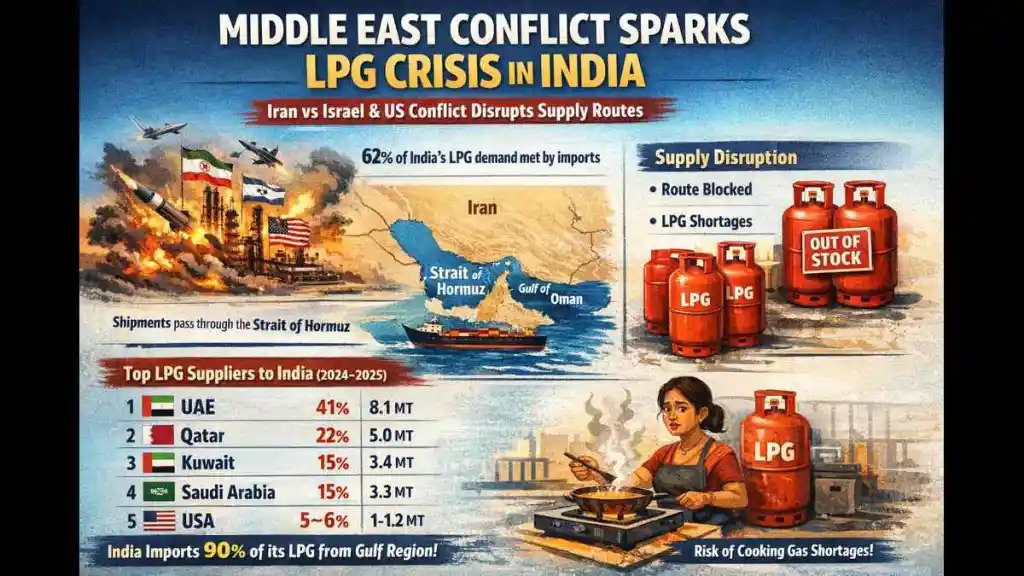
India is one of the largest consumers of LPG in the world. Although the country produces some LPG domestically, a large portion of its supply comes from imports. Many of these imports originate from oil-rich countries in the Middle East such as Saudi Arabia, Qatar, and United Arab Emirates.
When geopolitical tensions or conflicts occur in this region, the production and transportation of oil and gas can be disrupted. As a result, global energy prices rise, and importing countries like India face higher costs and possible supply shortages.
Because LPG prices are closely linked to global crude oil prices, any disturbance in the Middle East energy market can directly affect the price of LPG cylinders in India.
Impact of Middle East Conflicts on Fuel Supply
The Middle East is one of the most important energy-producing regions in the world. It supplies a significant portion of the world’s oil and gas through international trade routes. One of the most crucial routes is the Strait of Hormuz, through which a large share of global oil shipments passes.
If political tensions, military conflicts, or security threats occur near these shipping routes, fuel transportation can be delayed or disrupted. Even the fear of conflict can cause international oil prices to rise rapidly.
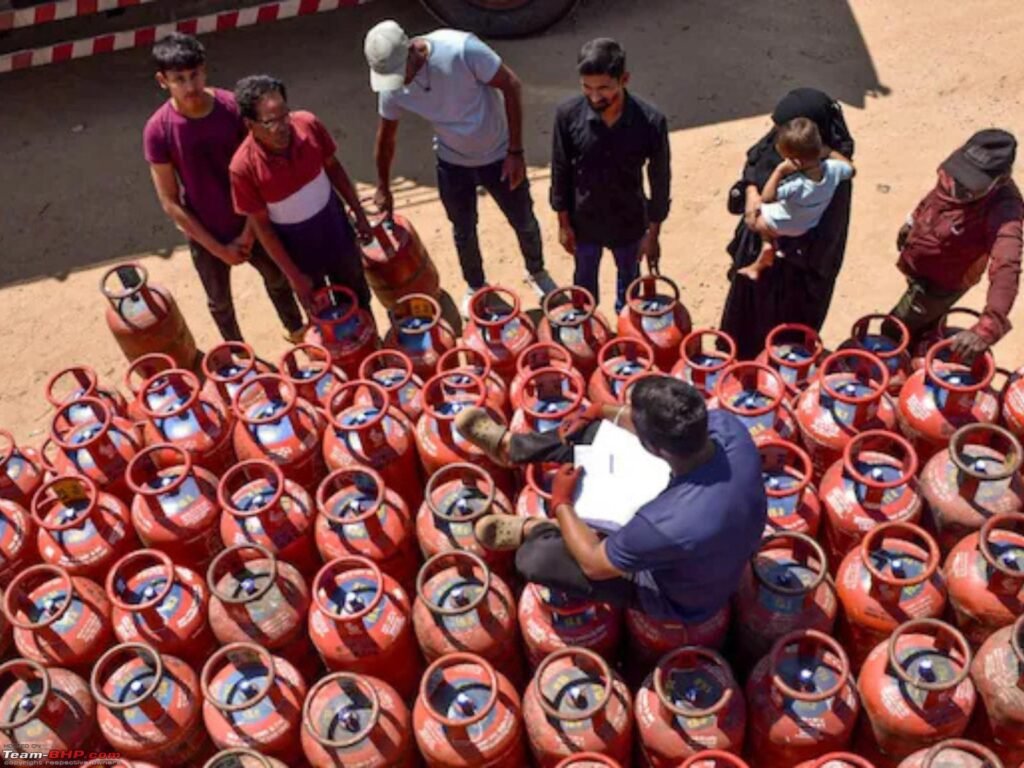
When such situations occur, the cost of importing LPG increases for India. This can lead to higher LPG cylinder prices for consumers and may also create temporary shortages in some regions.
Rising Prices and Economic Pressure
One of the biggest effects of an LPG crisis is the increase in fuel prices. When LPG cylinder prices rise, it places financial pressure on households, especially low-income families.
Many families rely on subsidized LPG cylinders provided under government schemes such as Pradhan Mantri Ujjwala Yojana. This scheme has helped millions of rural households switch from traditional cooking fuels like firewood to LPG.
However, when prices increase due to global crises, even subsidized cylinders can become difficult to afford. As a result, some households may reduce their LPG usage or return to traditional fuels, which can have negative health and environmental impacts.
Impact on the Indian Economy
The LPG crisis also affects the broader economy. Higher fuel import costs increase the country’s overall energy expenditure. This can contribute to inflation because transportation, manufacturing, and logistics costs may also rise.
Energy companies such as Indian Oil Corporation, Bharat Petroleum, and Hindustan Petroleum play a major role in importing and distributing LPG across India. When global prices increase, these companies face challenges in maintaining stable supply and pricing.
Additionally, the government may need to increase subsidies or adjust fuel pricing policies to reduce the burden on consumers.
Possible Solutions and Future Strategies
To reduce the impact of global crises on LPG supply, India needs to focus on long-term energy strategies. Increasing domestic LPG production and expanding storage infrastructure can help strengthen energy security.
Diversifying import sources is another important strategy. By importing LPG from multiple regions, India can reduce its dependence on a single geographical area.
The country is also exploring alternative energy solutions such as biogas, electric cooking appliances, and renewable energy. These alternatives can help reduce reliance on imported fossil fuels in the future.
Conclusion
The LPG crisis in India caused by tensions in the Middle East highlights the strong connection between global geopolitics and domestic energy security. Since India depends heavily on imported LPG, conflicts or disruptions in major oil-producing regions can quickly affect fuel prices and availability.
To protect consumers and maintain stable energy supplies, India must strengthen its domestic production, diversify imports, and invest in alternative energy sources. By adopting these strategies, the country can reduce the impact of global crises and ensure reliable access to clean cooking fuel for its population.